
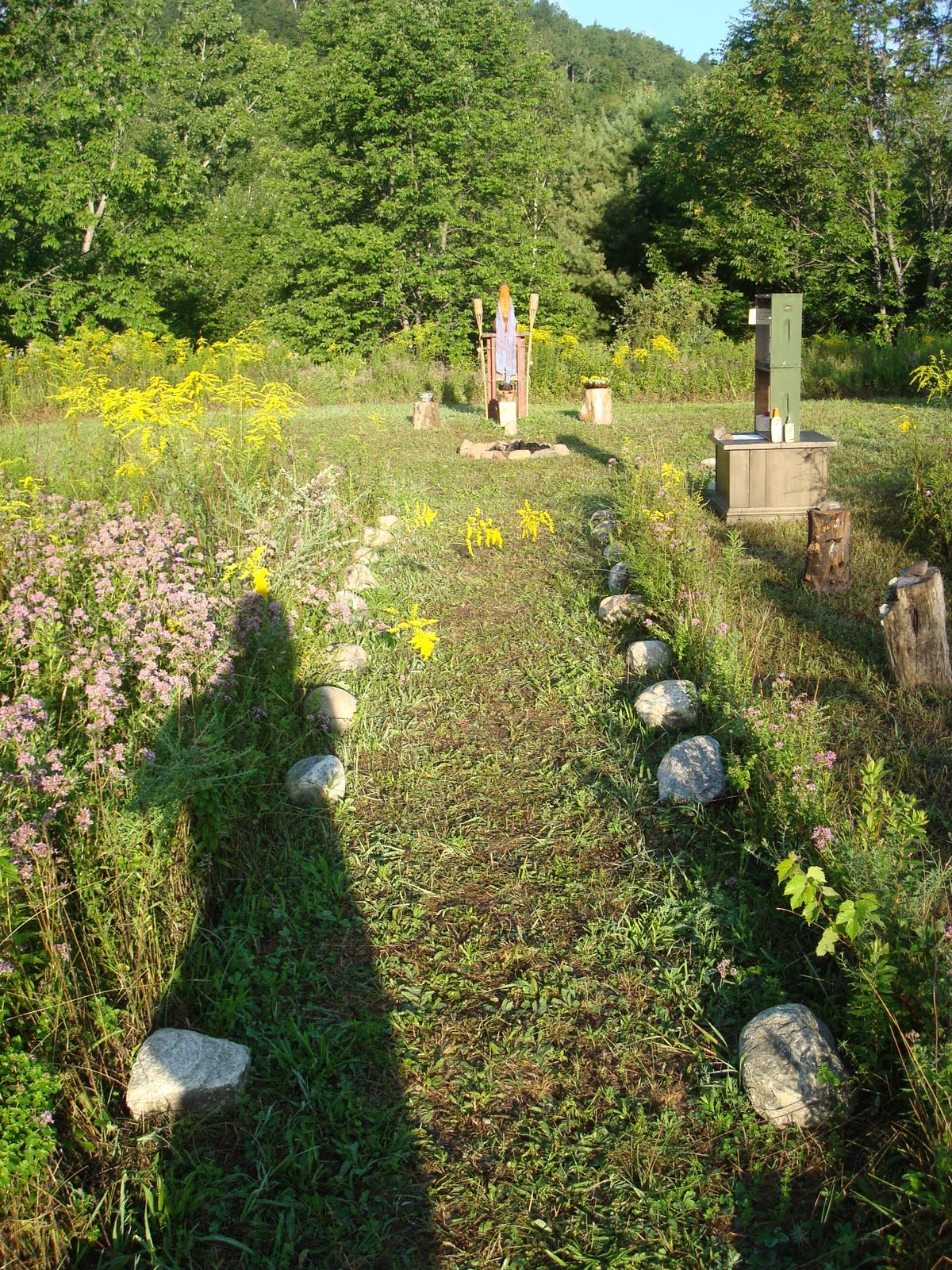
 I’m feeling, uh, a little self-conscious about this post. What’s a pro-feminist, post-modernist, sometime queer theorist doing building a phallic shrine, for the use of the temporary communities that are passing through Easton Mountain, week by week, for Eros Spirit Camp, Recovery Camp, and Gay Spirit Camp? Won’t Luce Irigaray and Leo Bersani hunt me down and kill me for this? I won’t riff on the paradox for too long: I’ll save that sort of reflection for a heavily footnoted article that maybe twenty people will read.
 Instead, I’ll simply say this: the inevitable woundedness of queer male sexuality in a homophobic world needs safe containers where we can affirm our desire and the animal nature that generates it. We need welcoming spaces where nature and culture converge in our sexuality differently from the toxic ways they converge (or don’t) in a mainstream culture that serves us so badly: where we can open the connection between our hearts and our cocks; between our human sexuality and the cosmos of which we're a part.
 I set out two weeks ago to create a shrine along Shinto principles, inspired by the phallic cults of central Japan, wherein smiling middle-aged matrons in kimono carry absurdly oversize joysticks down the street in annual processions.
 Things didn’t quite turn out as I planned.
I found a circle in the meadow, recently mown for a sweat lodge yet to be built. The spot cried out. I found the perfect ceremonial table—tall, narrow, simply and roughly made but elegant—sitting neglected in the greenhouse. I flanked the mown path into the circle with two lines of stones, fanning a few more out into the circle.
 And then realized to my astonishment that I was giving form to an enormous outdoor yoni-lingam: the phallus of Lord Shiva contained by the vagina of his Consort. Eight of us carried a two-foot wooden cock up the hill, banging drums, to install it as the central symbol of veneration, the first night of Eros Spirit Camp.
 Unfortunately, I had to settle for Tiki torches for nighttime illumination. The effect is a little cheesy, as though someone is about to be voted out of the tribe on Survivor: Penis Island.
The next day along came the groundskeeper, who promptly mowed a second birth canal into the yoni: never attach to the results of your actions. I turned the second passage into a kind of gallery with sawn stumps in place of columns in order to restore the integrity of the space.
 Then a thoughtful friend pointed out that the layout made no place for anal eroticism, no place for trans men. So last week’s first project was digging a hole behind the altar on the axis of the shrine, edged with stones, covered with charcoal, and dusted with vermillion powder; and rearranging the fire circle between the altar and the entrance into a vulva.
 Next comes an entrance gate now that more of us are well and truly invited in.


